




Kindergarten Spatial Relationships Lessons & Centres | Ontario 2026 Aligned
Number of Pages: 107
File Type(s):
$7.00
Save with a Bundle!
This product can also be found in:
-
Sale!
Kindergarten Math: Geometric & Spatial Reasoning Bundle | Ontario 2026 Aligned
Original price was: $53.00.$41.50Current price is: $41.50. -
Sale!

Kindergarten Math Units: Term 1 Bundle | 2026-Aligned
Original price was: $145.25.$116.00Current price is: $116.00. -
Sale!
Kindergarten Math Lessons & Centres | Year-Long Printable Bundle
Original price was: $293.00.$179.00Current price is: $179.00.


Kindergarten Spatial Relationships Lessons & Centres | Ontario 2026 Aligned
Are your Kindergarten students still struggling to describe where things are or follow directions using positional language?
This complete spatial relationships unit includes structured lessons and engaging, hands-on activities designed to help students describe location, understand movement, and build early spatial reasoning skills.
Students explore positional words, movement language, and perspective through interactive lessons, visual supports, and meaningful centre activities that connect directly to real-life experiences.
This resource aligns with the Ontario 2026 Kindergarten Math Curriculum and supports spatial reasoning development through play-based and hands-on learning.
✔ What’s Included:
📘 Structured Spatial Relationships Lessons
Students are introduced to spatial language through a clear progression:
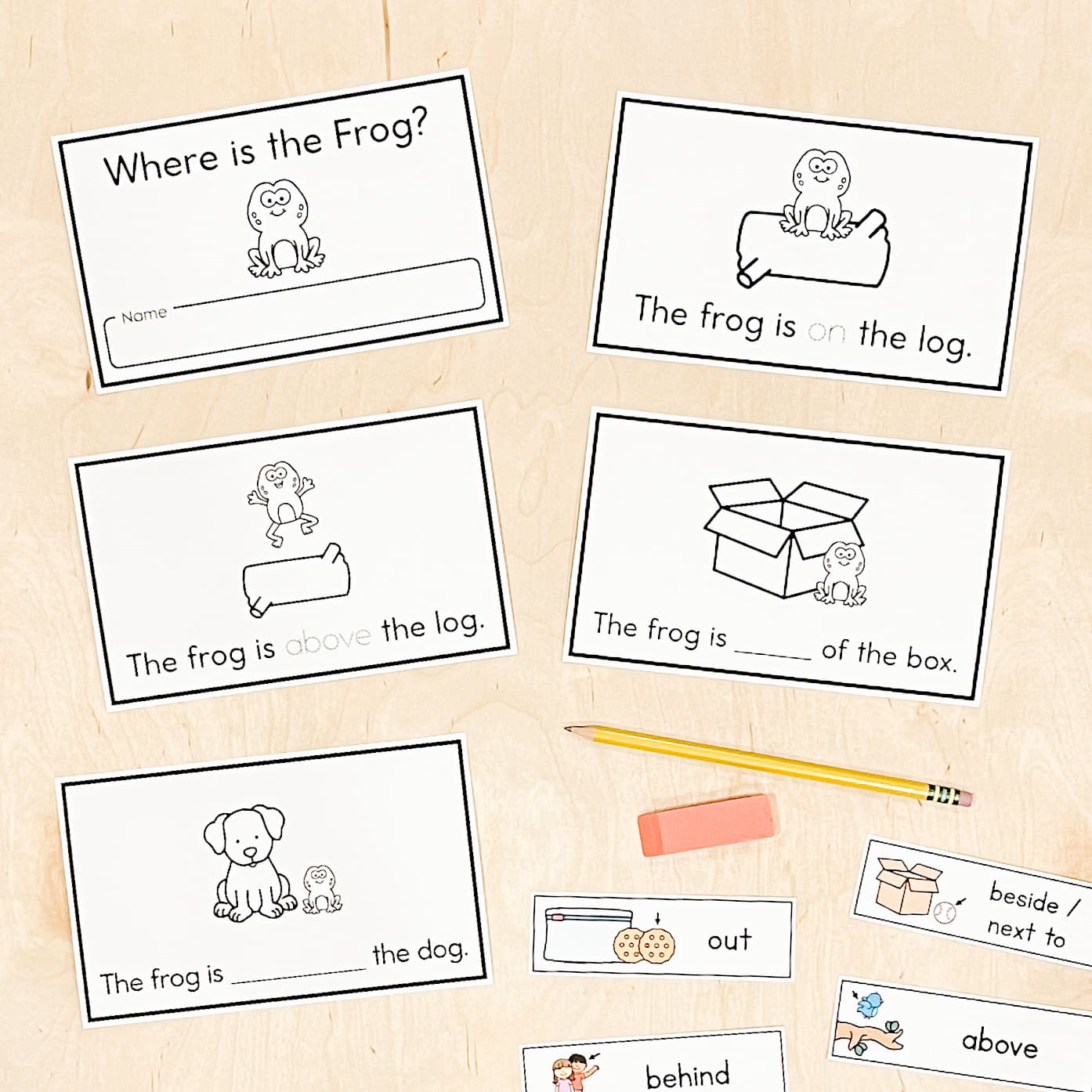
- Positional words (above, below, in, out, beside, in front of, behind, on)
- Movement words (forward, backward, towards, away, left, right)
- Following and giving directions
- Exploring perspectives (bird’s eye view and worm’s eye view)
Each lesson builds on the previous one to support understanding and retention.
These lessons are designed to be interactive and include modelling, student participation, and discussion.
👀 Whole Group & Discussion Opportunities
Use during your math block or throughout the day:
• Acting out positional and movement words
• Full sentence responses (“The bear is above the box.”)
• Direction-following games (Simon Says, movement routines)
• Perspective exploration through real-life examples
These routines support oral language, comprehension, and mathematical communication.
🎲 Hands-On Spatial Relationships Activities
Designed for centres, small groups, or whole group instruction:
• Read & Place (students read and physically position objects)
• Fix the Mistake (students analyze and correct incorrect statements)
• “Where is the Frog?” mini book (decodable positional sentences)
• Create a Path (coding-style directional movement with arrows and obstacles)
• Bird’s Eye vs. Worm’s Eye view clip cards
Students actively apply spatial language through reading, building, moving, and problem-solving.
🧠 Building Spatial Reasoning & Directional Thinking
Students are encouraged to:
- Describe where objects are using positional language
- Follow and give multi-step directions
- Use movement vocabulary in meaningful contexts
- Visualize objects from different perspectives
- Plan and explain movement paths
For example, students use arrows and directional language to guide a squirrel to an acorn while avoiding obstacles.
📄 Flexible Format Options
Most materials are provided in:
✔ Colour
✔ Black & white
✔ Multiple activity formats
Use what works best for your classroom setup.
🎯 Skills Students Develop:
• Using positional words (above, below, beside, etc.)
• Understanding movement and direction (forward, backward, left, right)
• Following and giving directions
• Spatial reasoning and visualization
• Recognizing different perspectives (bird’s eye vs. worm’s eye)
• Using complete sentences to describe location
This unit builds the foundation for:
→ Coding and directional thinking
→ Problem solving and sequencing
→ Geometry and spatial reasoning
→ Oral language development
💛 Why Teachers Love This Unit
✔ Clear progression from simple positional words to complex direction-following
✔ Combines movement, language, and problem-solving
✔ Hands-on and highly engaging
✔ Supports both math and literacy development
✔ Easy to use for centres, small group, or whole group instruction
✔ Low prep with flexible formats
✔ Ontario-aligned and classroom-tested
No guessing.
No disconnected activities.
Just clear, structured spatial relationships instruction that actually builds understanding.
📚 Curriculum Alignment (Ontario 2026)
This resource supports:
- A9.6 describe basic spatial relationships and movements, and visualize objects from different perspectives
- A9.7 give and follow directions for moving from one location to another
💡 Love this unit?
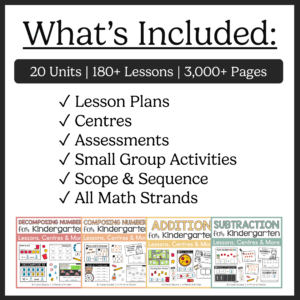
If you loved this structured approach to teaching spatial relationships, be sure to check out my other Kindergarten math units or grab the Year-Long Kindergarten Math Bundle for a complete, done-for-you math program with lessons, centres, and assessments.
Only logged in customers who have purchased this product may write a review.





Reviews
There are no reviews yet.